Friday, May 25, 2012

...Of Slow Suffocation

0 comments.


You know how when you're beginning to have an asthma attack ( I'm assuming for argument's sake that the gentle reader is like me, an asthmatic) and you suddenly realize that this breathing lark isn't as easy as everyone makes it out to be. There's a specific moment when something tells you that the simple act of breathing in and out is going to turn into an ordeal very soon. The attack begins with a rather melodious bout of wheezing, much like a fanfare announcing the arrival of the royal entourage in a historical epic.Your initial reaction is to tell yourself, "Oh boy, here we go again. Well, let's start by remaining perfectly calm shall we. We've handled stuff like this before, all we've got to do is keep breathing like we've practiced and it'll all be over before we know it" (Notice how the gentle reader uses the royal "we", pretty conceited chap isn't he). The initial self-imposed calm is short lived though, as the wheezing gives way to a weird dragging sensation in the lower chest and breathing begins to require effort. You look around for the trusty inhaler as you try to keep your rapidly increasing heartbeat in check, but very soon you realize that the inhaler was emptied and thrown out weeks ago.

That's when the attack enters its next and more serious phase, the stage where you have to sit up in your chair, place your hands on your knees and actually exercise your respiratory muscles so that you can receive oxygen. You wordlessly star chanting "I'm going to be OK, I'm going to be OK" to yourself as your head starts to spin, your heart beats loud enough to wake the people in the next room and a sudden thought fills your mind with dread,"What if this is it, the big one?". Luckily, that's about as far I've gown down the asthmatic route, stopping just short of the final, more sinister stage of an attack. That's when the instinct for self-preservation that has been coaxing the sufferer to try and keep breathing in and out in the hope of a let-off in hostilities is gradually overpowered by the deadly trio of muscle fatigue, a lack of oxygen and the deliciously narcotic effects of the carbon-dioxide flooding the brain. This dastardly trio gently distracts the brain, telling it "Why do you keep punishing yourself by taking these painful, pitiful breaths? Hasn't anyone told you, breathing's overrated. Why don't you let us take over and have a nice little lie-down? Don't worry, you won't feel a thing". The patient, who has pretty much given up at this point, waves away the final appeals of the ol' self-preservation instinct, puts his trust in the soothing thoughts filling his mind, and floating on a neurochemical high, hands in his dinner-pail.

The fact that I'm writing this is proof enough that I haven't reached the final, deadly stage yet. But I'm afraid that's more or less where I'm headed. Except for the difficult breathing bit, the palpitations and panic bit, the Carbon-dioxide high bit and the general dying from asthma bit. Let me explain.


A year ago, when I got posted to the jungle, a menagerie of horrors awaited me there. Does the gentle reader (provided he's still alive) dare to hazard a guess as to what was the most horrific attraction of this house of horrors? It wasn't the rather diverse, multiethnic and peacefully coexisting population of jackals, wild boar, porcupines, mongoose and lizards; it wasn't the unbearable heat or the stranglingly suffocating humidity, it wasn't the snakes who seemed to act like they owned the place (which let's face it, they did); it wasn't the fact that luxuries like electricity and running water were considered something that hadn't been invented yet and muslim showers were things you heard about in the fantastical stories told by travelers from faraway lands; it wasn't the leaky roof that ensured that a trivial thing like being indoors didn't get in the way of one's enjoyment of the weather; it wasn't the three mile distance between my room and the nearest human habitation, which meant that a simple task like having dinner involved jeep-rides over ill-maintained dirt tracks in the pouring rain; it wasn't the divers wasps and scorpions and mosquitoes and the unknown little insects that managed to send me into the ER at four in the morning with a severe allergic reaction and an unrecordably low blood pressure; it wasn't the weird composition of the water that miraculously accelerated my journey towards possessing a shiny bald pate before my twenty-sixth birthday.

The absolute cherry on the icing on the triple-layer of frosting on the cake was the fact that I had stepped into a communications black-hole.

No cellphone signals. Of any kind. No internet (obviously). No mailing address in case anyone, desperate to get in touch with me (the probability is very low, I know) would want to resort to snail mail. A very shoddy land-line and a complete absence of carrier pigeons. These conditions would have driven any normal person to distraction. For something like this to happen to me; someone who had won the Inter-district speed-texting championship for three years running, who had been kicked out of funerals for snickering at a text message, who had worn off the keys of one cellphone and had bought a rather expensive new one just weeks before being shipped off to Godforsakenland, who had made a career out of texting to the extent that keen-eyed readers would read friends of mine's  texts and say,"Hmm, this text carries shades of Neo-Expressionism mixed with a hint of Musab-ism". Like I was saying, for something like this to happen to me was the greatest irony of fate since Beethoven lost his hearing.

And this is where the rather shabbily assembled asthma analogy begins to emerge from the shadows and clears its throat as if to say, " What with the comparisons between the death of a person from a a horribly debilitating medical condition and being sent to a place where you can't text, I must admit I'm a rather flimsy analogy, but at least hear me out for a second".

When I had landed in the jungle and had taken stock of my situation, quickly tabulating the various drawbacks and annoyances and coming to the conclusion that staying in a communications black hole would be injurious to health, I calmly began devising ways of dealing with the situation. The first step was the most basic, an innate reflex found so commonly in sufferers of my malady that it seems to have been hard-wired into human brains as an instinct necessary for survival - wandering around the jungle with the cellphone held above my head, looking for signals. I was quickly rewarded with what ultimately turned out to be a deceptive sign of improvement. there were microscopic spots in the jungle where the heavens aligned just enough and the matter-antimatter interactions were occurring at just the right velocity to allow some cellphone signals to penetrate the black hole. This initial success was quickly negated when I realized that the signal hotspot was the regular meeting-place of the local serpentine population. A couple of near-brushes with my legless, slithery neighbors were enough to drive me back indoors.

Then began a desperate, rather pointless and in retrospect, quite pitiful search for solutions to the communications problem. A landline connection ? the exchange was too far away. Satellite internet ? The cost would be higher than the GDP of Sub-Saharan Africa. Cellphone antennas ? Excellent at attracting lightning, not so much when it came to signals. Carrier pigeons ? A cursory census of the birds of prey flying above my room quickly put that idea to rest. I had to admit I was licked, for the moment at least.

Then came the brief but mild improvement that lulled me into thinking that maybe I was going to survive after all. I managed to procure a clunky old phone-like contraption from somewhere that somewhat restored my contact with the outside world. If the weather was just right and the earth's magnetic axis was perfectly aligned and the sprites and elves of the jungle were feeling particularly benevolent, I could catch a few signals and maybe call home once every few weeks. In addition, I was also able to access something faintly resembling the internet for a few minutes every day, but only I limited myself to opening the picture-less, flash video-less mobile versions of most websites. Still, something was better than nothing, or so I thought.

Pay attention gentle reader, for this is where the asthma analogy finally emerges from its cocoon, revealing itself to be a supersonic jet powered butterfly. With lasers. Just as I thought I was finally recovering from this communications funk, out popped a ferocious lightning storm and fried every electrical contraption in my room, including my phone. In a single flash, my endeavors were nullified. By this time, the beginning of the summer and all its accoutrements - snakes and insects and the lot - coupled with my increasing frustration with my attempts to establish communication, had begun to take their toll. Where once I had bothered the hell out of friends and relatives with barrages of texts and calls, I was now in contact with only my immediate family and one or two very close friends. The regular blogging and Facebook trawling was replaced with hour-long waits for the darned webpage to open, followed by hours more before it would display properly. The  rather tenuous bridges to what was an essential social support structure were getting harder and harder to maintain. And then lightning struck, literally.

Not ready to give up just yet, I gave it one final try, setting up a new phone to replace the fried one. The result is that I'm now in the third, premorbid stage of communications deficiency. I can call home, but I have to endure fleeting signals, long periods of radio silence and frequent disconnections; to the point where it's become something of a chore to even call home. The dozens of other people, friends and relatives, have slowly and gradually depleted in number to just the one or two, for the same reasons. I'm beginning to think if this staying in touch lark is actually all that it's made out to be. If the parties of the second part were eager to communicate, they'd call themselves. And besides, who needs friends anyway, I'd much rather just curl up and spend the entire day in a semi-catatonic state. All the blogs I used to read and Qawwali recordings I used to share and the videos I used to convert into MP3s, slowly they're beginning to feel less and less worth the effort. After all, why can't I listen to my own music and watch my movies and read my books without rushing off to the internet to blabber about them to the rest of the world. I'm sure someone else will do it much better than me. I'll just listen to this 45 minute recording of Qawwal Bahauddin Khan myself and forget about sharing it with anyone else.

One by one, these long ingrained habits are getting harder and harder and lesser and lesser worth my while to keep up. The numbing effects of being incommunicado are gradually beginning to take over and I'm afraid that unlike my old friend Asthma, I might not be able to resist for long the rather tempting overtures of what appears to be a rather unsplendid isolation.

Friday, April 20, 2012

...On Levon Helm's Passing

3 comments.
Levon Helm passed away last night, a day after his family had posted that he was in the last stages of his long and heroic battle with throat cancer. Even though this was a long time coming, the slow inevitability of it doesn't lessen the sadness one bit.

I'm not in the mood for writing another obituary, Steven Hayden over at the AV club and Charles P. Pierce at Esquire have written quite beautiful and heartfelt ones that perfectly encapsulate how I felt about one of my favorite musicians and one of the coolest cats ever to grace this planet; and I've already inundated my Facebook with dozens of links and videos and so forth in what has  become the 21st Century's go-to grieving ritual.

After Clarence Clemons' passing earlier this year and now Levon's, I think someone must send out a team of doctors to check up on Dylan, Cohen, Neil Young, Tom Waits, the Boss and the rest of my musical heroes and give them all clean bills of health. I'll readily volunteer my services for such an endeavor.

Anyway, Rest in Peace Levon, and thanks for all the years of great music.

Thursday, March 8, 2012

...Of Patriarchs And Distant Relatives

4 comments.
One of my most fruitful archeological endeavors was sparked by an observation by a friend that for all the hours upon hours of Qawwali recordings we've managed to collect, we still have only managed to unearth recordings by two (or very rarely three) generations of Qawwals. The recordings from older Qawwals have either disappeared under the sands of time, or their descendants haven't adopted the hereditary profession of Qawwali. In the time that's passed since that post, the generosity of friends and fellow Qawwali enthusiasts has enabled me to fill some of the gaps in my collection. There are now many Qawwal lineages that can be followed across three (and in one case, even four) generations. As an example, I will focus here on three patriarchs, who have blazed the trail for generations of Qawwals to come, and whose descendants have ably carried on their family tradition.


Ustad Muhammad Ali Faridi Qawwal

Ustad Muhammad Ali Faridi is a seminal figure in the history of 20th Century Qawwali, influencing everything from how it is performed to the position of the performers in a Qawwal party. Incorporating Classical Sufi texts with the tradtional Doaba ang of Punjabi gayeki, he created a potent style of Qawwali that proved popular both with the discerning listeners and the masses. Although his recordings date from the mid '30s to the late '60s, he strated performing much earlier. Accompanied on his latter recordings by his son Abdul Rahim Faridi, the Ustad displayed a unique and very malleable voice that was very expressive in the upper registers and displayed glimpses of his rather formidable classical training. His list of shagirds includes giants like Agha Rasheed Ahmed Faridi and Agha Bashir Ahmed Faridi along with his son Abdul Rahim Faridi, who in turn instructed modern practitioners like Faiz Ali Faiz Qawwal. The Ustad's lineage continues through his grandson Moeen Ali Faridi Qawwal.


Kallan Khan Qawwal Sikandarabadi

Kallan Khan Qawwal is a very important member of the so-called third wave of pre-partition Qawwali gayeki. Hailing from Sikandarabad and affiliated with the shrine of Hz Alauddin Ali Sabir (RA) of Kalyar Shareef, Kallan Khan was an innovator in that along with performing classical Sufi texts, he also wrote many new pieces. Most of his recorded oeuvre consists of his own poetry put to music. He had many shagirds but the most famous among these was his nephew Ghulam Fareed Sabri. In the latter half of Kallan Khan's career, from the 40's on to the late '50s - the era most of his recordings are from - he is accompanied by Ghulam Fareed Sabri, who, if we observe the recordings chronologically, gradually takes over the duties of lead singer from his uncle, whose voice, though powerful, begins to pale in comparison to his nephew as time goes by. (Gosh that was a long sentence). Kallan Khan's shagird in turn went on to become one of the greatest Qawwals of the latter half of the 20th Century and with his phenominally gifted brother Maqbool Ahmed Sabri, created the incomparable Sabri Brothers And Ensemble Qawwali Party. The third generation of the Sabri clan is represented by Amjad Farid Sabri Qawwal.


Baba Din Muhammad Jalandhri Qawwal

When I wrote the earlier post on the Qawwals of the earlier half of the 20th century, I added Din Muhammad Jalandhri almost as an afterthought, because I didn't have any information about him that I could append to his rather wonderful recording. Over time however, I have come to learn a great deal about him and have come to realize his stature among the great Qawwals of the early 20th century. Apart from having an amazingly robust and vociferous andaz, Din Muhammad Qawwal, or Baba Deena Qawwal as the gentlemen over at Rehmat Gramophone House call him, is the forbear of not one but TWO illustrious Qawwali lineages. He was the uncle and ustad of arguably the greatest Qawwals of the 20th century, Fateh Ali - Mubarak Ali Qawwals (who are rightly called Ustadon ke ustad, which makes Din Muhammad Ustadon ke ustadon ka ustad). In turn, Fateh Ali-Mubarak Ali taught performers like the above mentioned Agha Rasheed Ahmad Faridi and Agha Bashir Faridi as well as Bakhshi Salamat Qawwal and of course, their successor Ustad Nusrat Fateh Ali Khan. And in Rahat Fateh Ali Khan, we see the fourth generation of Baba Din Muhammad carrying the torch forward. His direct lineage too, is impressive to say the least. He was the father of the amazing Miandad Khan Qawwal. Miandad Khan Qawwal and his brother Hafiz Dad Qawwal were affiliated with the shrine of Hz Baba Farid (RA) at Pakpattan and performed till Miandad's death, after which the mantle was taken over by his son, the supremely gifted Badar Miandad Khan Qawwal, who unfortunately like his father, died at a very young age. His younger brothers Sher Miandad Qawwal et al currently perform all over the world.


I initially thought I'd write about and share recordings of only these three phenominal qawwals in this post but considering that my holidays are at an end and I won't be able to write for another month or so, I figured I might as well share some more of my favorite recordings. Some of these recordings have been uploaded by an angel in human shape on a youtube channel called "dogslum23", a channel I wholeheartedly recommend to every Qawwali fan. Here then are selections from some of my favorite recordings uploaded on the abovementioned channel. Most of the qawwals are known to me, but a couple are complete unknowns and I hope that like Baba Din Muhammad, I will one day be able to uncover more of their recordings and more about their lives.

Kallan Khan Qawwal Meerthi

Prefaced by an amazing Sitar baaj, Kallan Khan Qawwal Meerthi (not to be confused with Kallan Khan Sikandarabadi) sings a seminal classical kalam of Maulana Jami (RA) Hasan Multani that is sadly very rarely sung by modern Qawwals.


 Professor Miran Baksh Qawwal Of Peshawar

From the age of the recordings, along with the photos and the dates of birth and death provided by the uploader, Miran Baksh Qawwal appears to be a contemporary of the 2nd generation of pre-partition Qawwals. From his phenomenal performance, his title of 'Professor' and the wealth of medals pinned on his chest, he appears to have been an amazing and highly respected Qawwal. Here he sings one of my favorite Kalams of Hz Amir Khusrau (RA).


Hafiz Atta Muhammad Qawwal

This recording begins with a very melodious Doha, whose final line is pregnant with longing and love for the Prophet (SAW); 'Kyun Madni deri'yaan lai'yaan?'. Performed in the style of a traditional Punjabi folk tune with a healthy number of taans thrown in and a 'gharra' playing in the background, this is a wonderful performance.


Kaloo Qawwal Of Calcutta

One of the first Qawwals to be recorded in India, Kaloo Qawwal performed without the traditional handclap accompaniment and traditional instruments, presenting instead a more westernized approach. Here he sings a famous Arabic Naat, giving it a full studio treatment.


Azim Prem Ragi Qawwal

A very important pre-partition Qawwal in that he successfully met the requirements of the audience at Sufi shrines as well as the gramophone buying public, Azim Prem Ragi performed well into the '50s. The following recording appears to be post 1947 because of the use of the phrase 'Pak aur Hind', and like most of his recorded output, was penned by Prem Ragi himself.


And finally, one recording each by the three stalwarts mentioned in the first part of the post.

Ustad Muhammad Ali Faridi Qawwal


Kallan Khan Qawwal Sikandarabadi


Baba Din Muhammad Jalandhri Qawwal


N.B Any further information about, or recordings by the Qawwals mentioned above would be very gratefully received, so will any comments and corrections.


Sunday, February 12, 2012

...Of Honourable Mentions And Instant Infatuations

5 comments.
Qawwali, like every other field, is dominated by giants. There's half a dozen or more names that are known to every Qawwali listener, and even to most lay-listeners. Mention the late Nusrat Fateh Ali Khan, the Sabri Brothers, Aziz Mian Qawwal or Munshi Raziuddin Ahmed and you're bound to be met with nods of recognition if not appreciation. The caliber of their work along with their popular appeal ensures that these names will last long in the memories of listeners. But though the brightest stars in the Qawwali firmament, they're by no means the only ones. Some of the most amazing recordings I've ever heard are by musicians who most people (apart from hardcore Qawwali enthusiasts) haven't heard about, or worse, haven't heard. Here then, are six recordings by artists that deserve to be heard, appreciated and celebrated because they are, to put it succinctly, absolutely awesome. These recordings also share another important characteristic. The first time I heard each of them, it took me just the opening first minute or so of the recordings to instantly fall in love with them. I didn't need to hear the rest of the performance to know that it was absolutely awesome, I just assumed it. And in all cases, my assumption was correct. So, without further ado, here are six recordings by (not for long I hope) lesser known artists that captured me instantly.

1. Surkh Aankhon Main Kajal Ke Doray - Amir Rafiq Murkiaanwale Qawwal
This is an amazing, yet sadly incomplete recording. Ustad Rafiq Ali and his son Amir Ali lead the qawwals in a wonderful composition based on Raag Kedara. What isn't there to like in this performance. From the phenominally melodic and mellifluous voice of Ustad Rafiq Ali to the wonderful theka on the tabla, from the wonderful talaffuz that renders the words even sweeter (Surkhe-yaan khon main kajal ke doray, mukh pe-yaan chal sajaya hua hai) to the absolutely impeccable girah-bandi by the three main vocalists. Then there's two or three little flourishes that really stand out. Ustad Rafiq Ali uses his astounding voice to great effect in four superb taans, in four different raags. And then there's a sargam that's not exactly a sitar and not exactly a mandolin, again by Ustad Rafiq Ali. And in the middle of the performance, as the qawwals launch into a long takraar on 'Har Koi Dil Ka Nazraana Le Ke', all these disparate elements come together to weave a unique type of magic.

Time it took for me to get hooked : 30 seconds


2. Kujh Izra'eela Taras Kareen, Mere Yaar Ton Pehle Na Aveen - Mubarak Ali, Niaz Ali Qawwal
Mubarak Ali "Mattaa" Qawwal possessed one of the most gosh-darned awesome voices I've ever heard; loud, urgent, rounded, rich, emotive and possessing the ability to crawl under your skin and knock you senseless. His voice was best suited to Punjabi kalaams where his unique 'andaz', coupled with his grasp on the Punjabi and Seraiki Sufi canon proved irresistible. In this recording, he is imploring the angel of death - Azrael - to tarry a while, lest he arrive before the beloved. The doha that starts off the performance is brilliant, and the girahs inserted are almost tearjerkingly beautiful - or at least they were for me, when I heard the kalaam in the aftermath of a series of family bereavements. One of the verses, I won't say which, lead to an intensely spiritual moment that can only be described as an epiphany. There are short takraars, a shehnai in the background and a brilliant melody, and there's the amazing voice of the qawwals, all in all a wonderful performance.

Time it took for me to get hooked : 45 seconds


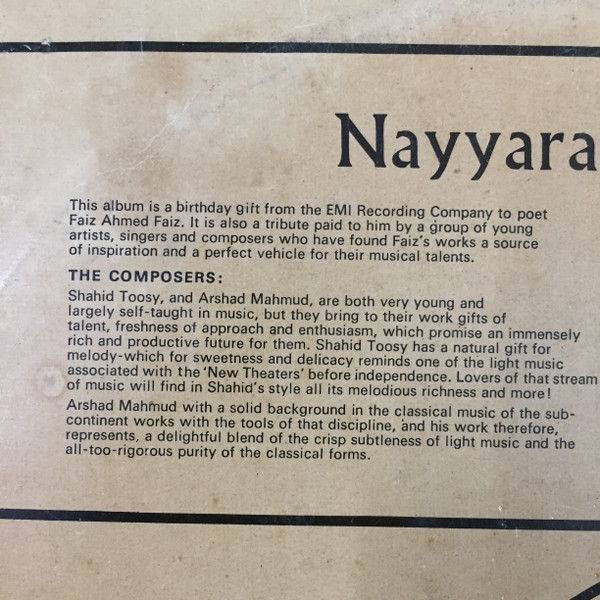
3. Ganj Shakar Ke Laal Nijamuddin - Zaki Taji Qawwal
I must confess that I don't know much about Zaki Taji Qawwal and his party apart from a few fragments of information. As is obvious from his name, he was a devotee of Hz Baba Tajuddin (RA) and was a frequent performer at mehfils in Karachi in the '60s and '70s (according to a friend). There's only one album of his circulating on the internet, an EMI release, and it's a slickly produced, instrumentally rich affair. One track stands out though, and was arresting enough at first listen to be played on repeat for days. With a crisp voice that reminds me at places of abu Muhammad Qawwal's, Zaki Taji sings the kalam with wonderful economy and marvelous "ghinaa'iat". As he almost lovingly utters the names of the Sufi saints, the shehnai and sitar offer sparse yet effective punctuation. I don't know if one can hear the phrase 'Pir Nijamuddin chatar khilaadi' without a hint of a smile, I know I can't.  A sudden shift in tempo mid-way through the kalam lends a nice sense of urgency to the second half of the kalam. A few friends of mine, who are pretty devout 'Bedam-waalas' often call Bedam Shah Warsi the 'Khusrau-e-Saani' or the second Khusrau. While I don't agree with them most days, this kalam and it's delightful performance come well-nigh close to making me agree with them.

Time it took for me to get hooked : 30 seconds


4. Main Nazar Se Pi Raha Hoon - Maulvi Ahmed Hassan Akhtar Bheranwale
I've been a fan of Maulvi Ahmed Hassan Akhtar Bheranwale ever since I started seriously listening to Qawwali. There is something about his uniquely rasp voice and his endearingly beautiful accent that I've loved since i first heard it. Added to that is the fact that his group was almost preternaturally gifted in what is essentially the foundation of a good Qawwali performance - the taali and dholak rhythm section. Each of his performances is propelled by a lively and hypnotic beat. In this recording, the 'Pukka' punjabi accent and a brilliant Urdu kalam come together to wonderful effect. Maulvi Ahmed uses superb girahs to expound on a simple yet expressive kalaam. The vacillating taans are simple and effective, the tempo is stately throughout and Maulvi Sb's voice cracks at the right places.

 Time it took for me to get hooked : 35 seconds


5. Avo Saiyyo Ral Deyo Ni Vadhaai - Bakhshi Salamat Qawwal
If I had my druthers, every Qawwali fan would listen to at least one Bakhshi Salamat performance per day, every day. I am totally in awe of this group and especially the vocal talents of the three main singers, the brothers Ustad Bakhshi Khan and Ustad Salamat Khan along with their student Sadiq Ali Saddo. One of the most gifted of Fateh Ali Khan's shagirds, Bakhshi Khan possessed one hell of a voice. The anguish, urgency and desperation he manages to elicit with his voice aren't found anywhere else. And his pauses, wah. This may sound silly but I think he ranks along with actors like Talat Hussain and the great Laurence Olivier in the use of the pause. Case in point is the absolute hammer-blow he strikes when he shouts' Ni eh oho ee Ranjha chaak je, Roop vattaa ke khairi ........... aya'. The two supporting singers offer up endless alaaps and taans, one-upping each other as the shehnai weaves a melodic line behind them. The girahs are 'thaith' punjabi gems and the tempo is unflagging, plus there's an almost imperceptible lilt at the end of each verse. The rather abrupt ending leaves the listener wanting more, and I certainly don't blame him.

Time it took for me to get hooked : 13 seconds


6. Yeh Payaam De Gyi Hai Mujhe Baad-e-Sub'ha Gaahi - Ustad Mashooq Ali Khan

I couldn't offer a more perfect example of instantly falling in love with a recording than this one. Only two or three seconds into it and I was absolutely hooked. What an amazing Sarangai prelude, and what inventive work on the tabla, wah. It is also obvious pretty immediately that this is a rather unusual recording in that Ustad Mashooq Ali Khan is so obviously not a Qawwal. The idea of having a classical singer perform one of Iqbal's landmark kalaams with a Qawwali party may sound dodgy in theory, but in practice it works brilliantly. The Ustad's adayegi is so appealing, his talaffuz is so good, that it doesn't matter that he's only performing girah-bandi on the main text, which the chorus is offering up in short takraars. After all, one of the peculiarities of Iqbaliyat when rendered in Qawwali is the almost endless opportunity for girah-bandi. In this case the girahs are exceedingly apt, and boy does the Ustad deliver them. I could listen to the one second clip of him saying 'Shikoh-e-Faqeer' (at the 3:27 mark) over and over again all day. This performance has a stately tempo, wonderful yet unobtrusive instrumentation, amazing girah-bandi, delightful mini-takraars and a magnificent lead vocalist. Hence it's not much of a surprise that it sits among one of my all-time favorite Qawwali recordings of all time.

Time for me to get hooked : 25 seconds


.................................................................................................

Saturday, February 11, 2012

...Of Dargahs And Devotions

0 comments.
If I had a penny for every time someone's asked me variations on the following sequence of questions, I'd be a millionaire by now. The questions being...

"Where are you going ?"
"Data Darbar"
"Why?"

Rumors run rife among my friends and family as to what can my reasons be for frequenting Sufi shrines and Mazaars so often. According to some, I'm a hardcore dope-fiend who goes there to score. Others think I'm one of those multitudes who can be found 'maatha-taiking' and 'mannat maaning' at the graves of the Saints. Still others have the eerily accurate idea that a hardcore foodie like me goes there to sample the delights of the 'langar'.

My reasons are varied and even I'm not fully aware of them, but a few are very obvious. The places radiate peace and calm, there is an overpowering spiritual energy to them, they are perfect for contemplation and what people in my line of work call 'zeroing the bubble', and yes, the 'langar' food is brilliant. Another important reason is of course, the music. Almost invariably, the shrines that I've visited have had a tradition of regular musical performances that are carried out by a small, hereditary group of 'darbari' musicians. They vary from accomplished to inept, from crude to highly polished, but they share one common bond, the bond of devotion to their Dargaah and their 'Peer', and this devotion shines through in their performance, whether Qawwali, Kafi singing, Noha-khvaani or simple instrumental musical performances. Below is a selection of some of the many musical performances, both regularly held and impromptu, that I've come across in my travels around the various Sufi Shrines of Pakistan.

One of the first places I visited on my 'Great Roadtrip' across South Punjab was the Shah Rukne Alam (RA) shrine in Multan. One of the most easily identifiable landmarks of Pakistan, the beautiful shrine is normally a quiet, peaceful place. Music is generally not an important part of the 'Suhravardia' silsila's devotional practices, so it was a bit of a surprise for me when, sitting in the courtyard of the shrine, I heard a number of voices joined in a rather unusual chant. I immediately whipped out my cellphone and started recording. I found out later that it was a group of villagers from interior Sindh who regularly make the pilgrimage to the Saint's shrine to pray for bountiful crops, successful marriages and the birth of children.

Villagers chanting in prayer at the shrine of Shah Rukne Alam (RA)


Ucch Shareef is one of the most historically and culturally significant places in Pakistan, with Pre-Mughal tombs littering the landscape, nestled among scores of Sufi shrines, each with a unique history and a devoted flock of 'mureeds'. The birthplace of the great 'Pathanay Khan', the town also has a longstanding musical legacy. One of the many shrines in Ucch Shareef is the one belonging to the Naqshbandi saint Hz Mehboob-e-Subhani (RA), which was one of the noisiest, most interestingly populated places I've been to. There were children playing and crying, elders snoozing and eating, women knitting and chattering, and a group of seminary students reciting the Quran.In this astounding cacaphony were mingled the sounds of two local minstrels, a pair of wandering 'Noha-khvaans' who were singing a Seraiki 'Noha' or lament for the Shuhada of Karbala. An unusual style and beautiful language mixed with a unique 'takrar' based style make them two of the most unique performers I've heard.

 Two wandering minstrels performing a 'Noha' at the 'Mehboob-e-Subhani' shrine at Ucch Shareef


Around six months ago, a friend received a rather anguished email from a Qawwal in which he lamented the 'disastrous decline of Qawwali' in Pakistan. I informed my friend that the reports of Qawwali's decline were greatly exaggerated and the genre was in fact, pretty healthy and more or less chugging along smoothly. The reason was that there's still a large number of 'Darbaari' qawwals who regularly perform at shrines all over Pakistan to undiminished audiences and who are still carrying out the task of propagating and transferring the wealth of devotional and musical treasures that Qawwali encompasses. Case in point is the following video. On a trip to Qasur, I made a detour to the hilltop shrine of Hz Kamal Chishti (RA). One has to climb at least two hundred steps to get to the shrine which overlooks the city of Qasur, a fact that ensures that the crowd of devotees is often very thin. On the day I went there, there was a small party of Qawwals performing there. They weren't musically very talented, the instruments were in a state of disrepair and there wasn't a soul in sight for them to perform for, yet they were singing away like nobody's business. And when I asked them if they knew anything in Farsi, they readily obliged ...


Qawwals at the shrine of Hz Kamal Chishti in Qasur


 While on the subject of Qawwali, I've been lucky enough to have attended a fair number of mehfils, both private and in a Khanqahi setting. Each has its own pleasures, but I've always been partial to the Sufi kalam that's performed in a Khanqah. And of all the places I've been to, the one place that has proven to be an almost textbook example of what a Qawwali mehfil in a Khanqah should be is the daily Qawwali that takes place at the afternoon majlis at the shrine of Hz Pir Mher Ali Shah Sb (RA) in Golra Shareef. In a tradition that goes back to Hazrat Sb's own time, a daily Qawwali mehfil takes place at the shrine just before mid-day. The late, great Haji Mahboob Ali Sb (RA) performed in these mehfils for around forty years, and after his death the tradition was continued by his brother (and accompanist) Haji Mushtaq Qawwal. The current darbaari qawwal at the shrine is Billa Qawwal, who makes up in choice of kalaam and use of 'tazmeen' and 'gireh-bandi' what he lacks in classical musical training. All the requisites of khanqahi Qawwali are adhered to; the mehfil takes place in the presence of a Shaykh, in this case, Pir Mehr Ali Shah (RA)'s grandson, Hz Shah Abdul Haq Gilani, the attendees are respectful and discerning, the 'nazar' to the qawwals is given through the hands of one of the many important spiritual personages who attend, and the atmosphere is one of a spiritual "wa'az" or instruction.

Nasima - Billa Qawwal And Party at the Golra Sharif Shrine


The next video was recorded at what I can safely call the greatest day of my life. It wasn't the day I graduated, or the day I got accepted into Med school, or the day I got engaged (apologies to the future missus). It was the final day of my Great Roadtrip, when after having visited Multan, Bahawalpur, Ucch Shareef, Derawar and Dera Ghazi Khan, I made my way to the town of Mithankot to pay my respects at the shrine of one of the greatest of Sufi poets, Khwaja Ghulam Fareed (RA). Pathanay Khan and Zahida Parveen were playing in the car on my way there, and a large number of Khwaja Sb's Kaafis were written on the walls of the shrine. The obvious step after payng my respects was to ask around for anyone who might sing one of Khwaja Sb's immortal kaafis for me. Somebody directed me to a group of Fakirs sitting in a corner of the shrine courtyard, one of whom was the current Khalifa of the shrine. I introduced myself and expressed my desire to listen to some of Khwaja Sb's kalam and the Khalifa Sb graciously consented to sing some for me, albeit making excuses for his voice. As I brought out my cellphone camera and he started singing, goosebumpy silence was quickly followed by a sudden gush of emotion as tears came to my eyes. I looked around and realised that I wasn't alone, very soon the entire circle of Fakirs was gently sobbing (some of which can be heard on the recording). This in itself would've been enough to make this an unforgettable experience, but somehow I plucked up the the courage to ask the gathered audience if  I could sing something too. they graciously consented and there, right next to Khwaja Sb's resting place, in the company of a group of Fakirs, I sang one of my favorite (and my parents' and grandparents' favorite) kaafi. When I ended, the teary-eyed assemblage very kindly appreciated me and we prayed together for a while before I took my leave. Nothing, and I mean nothing has come close to the sheer spiritual and psychological elation I felt that day.

 Kafi Khwaja Ghulam Fareed (RA) sung by Khwaja Sb's Khalifa


So there you have it. The secret's out and now whenever you see me heading out for another Sufi shrine, you'll know why I'm going there. I'm going there for spiritual solace, I'm going there out of curiosity and respect for the personage buried there, I'm going there because I've heard their langar is good. But I'm also going there in search of music, especially when it mixes with the rarefied atmosphere of a Dargah and produces moments of absolute joy like this one ....